All posts




All posts
Prior Authorization
Provider
March 16, 2026
An hourglass has one defining feature: the neck controls everything. It doesn't matter how much sand is loaded above it or how much room exists below– the rate of flow is determined entirely by the opening in the middle. Pressure the top chamber, clear the bottom, redesign the chambers themselves, none of it changes throughput. The neck is the system.
In the revenue cycle, prior authorization is the neck.
The typical flow starts when a physician places an order. That order generates a referral, which flows to scheduling. The patient gets placed on the calendar, and only then does the authorization team begin assembling documentation and submitting the request to the payer. At that moment, the system begins to behave like an hourglass.
Scheduled procedures accumulate in the top chamber, patients booked on the calendar waiting for authorization clearance; care delivery and revenue realization sit in the bottom chamber, able to proceed only at the rate that authorizations are approved. You can redesign your billing operations, tighten your coding accuracy, and invest in denial management infrastructure– none of it changes the flow. The constraint is at the neck. Everything else– scheduling, billing, care delivery– waits on what happens there.
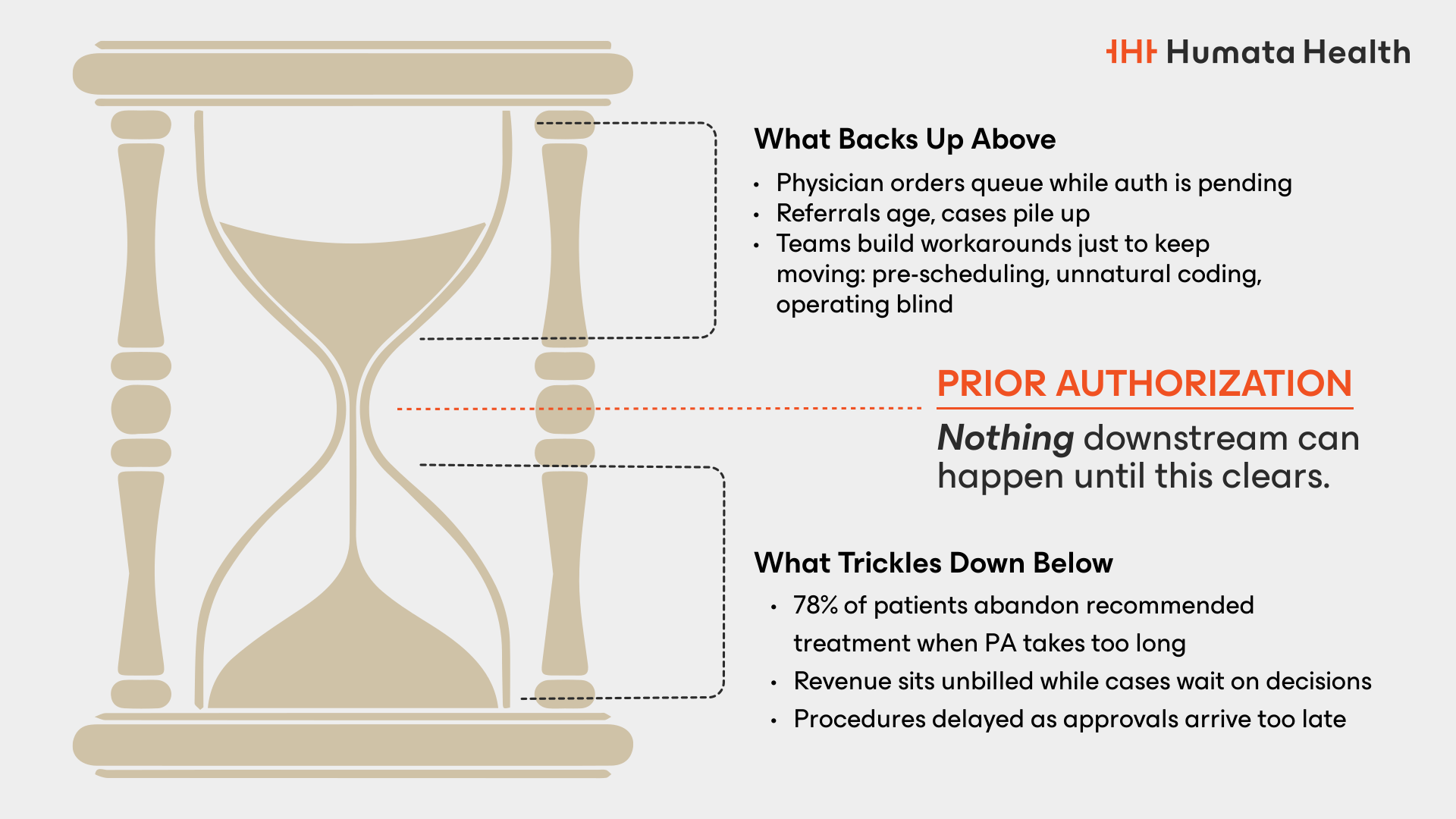
The visible pressure is administrative. Physicians submit an average of 45 prior authorization requests per week, with staff spending nearly 14 hours weekly on approvals alone. But that figure, striking as it is, still captures only the direct labor cost. It doesn't account for everything that accumulates in the top chamber while authorizations are pending.
In most organizations, the scheduling and authorization functions operate in parallel but depend on one another. Schedulers place patients on the calendar based on clinical orders and expected timing, while dedicated authorization teams assemble documentation, submit requests, and monitor payer responses. When authorizations stall, the pressure shows up in both places.
Authorization teams work expanding queues of pending cases, tracking status across payer portals, fax responses, and phone calls. At the same time, schedulers are forced to manage calendars built on uncertainty. Procedure slots are held for patients whose authorization status is still unresolved. Cases get tentatively scheduled, then reshuffled when approvals arrive late, or not at all. Clinical teams, unwilling to let the bottleneck stop them entirely, develop workarounds that introduce their own distortions: coding defensively to anticipate payer objections, building parallel tracking systems outside the EHR because the official workflow has too many unknowns.
When authorization timing varies unpredictably, operating room blocks, imaging slots, infusion appointments, and consult availability cannot be forecast reliably, leading to unused capacity, last-minute reshuffling, and preventable patient cancellations. The result is an organization that is, in a meaningful operational sense, flying partially blind.. Staff are working hard, often heroically, but a substantial portion of that work is simply managing uncertainty created by a process that hasn't been resolved yet.
The effects in the bottom chamber are less visible but arguably more consequential, because by the time they materialize, the authorization decision is long past and the damage is harder to attribute.
Procedures get rescheduled. 94% of physicians report that prior authorization delays access to necessary care, and 78% of patients abandon their recommended course of treatment entirely when the process takes too long. Each abandonment is both a care access failure and a revenue event: a scheduled procedure that won't be billed, a slot that won't be filled, a patient who may not return. Revenue sits unbilled or in jeopardy while cases wait for decisions that should have come days earlier. As much as 12% of hospital revenue can be at risk due to denied claims, with prior authorization issues ranking among the leading denial reasons.
And then there's the cost that almost never appears in the analysis: every resource that waits. The nurse who held the infusion chair, the OR block that went unused, the authorization specialist who spent the afternoon on hold, the physician whose schedule ran light because three cases were pending. The cost of a delayed authorization isn't just the denied claim — it's the accumulated cost of everything that was ready to move but couldn't.
This is where most conversations about prior authorization get the math wrong. The standard framing treats PA as a cost center: how many hours does it take, how many FTEs does it consume, what's the per-case cost? That framing produces real numbers, but it systematically understates the actual impact, because it measures PA in isolation rather than as a system constraint.
The principle here is straightforward and well-established in operational theory: a system can only move as fast as its slowest step. Improving any other step, no matter how significantly, cannot increase overall output meaningfully if the bottleneck remains unchanged. Widening a highway doesn't help if it feeds into a one-lane bridge. This is why organizations can make genuine, measurable improvements to their billing operations, denial management, and coding accuracy and still find that throughput doesn't improve the way the investments would predict. The constraint is at the neck, and the neck determines the pace.
When PA flows, the gains are not additive. They compound. Faster authorizations mean more predictable scheduling, which means better capacity utilization, which means more procedures completed, which means more revenue captured, which means less write-off risk. The staffing hours reclaimed from manual follow-up become capacity that can be redeployed. The scheduling slots that were being held speculatively get filled with confidence. The physicians whose time was consumed by administrative friction get it back.
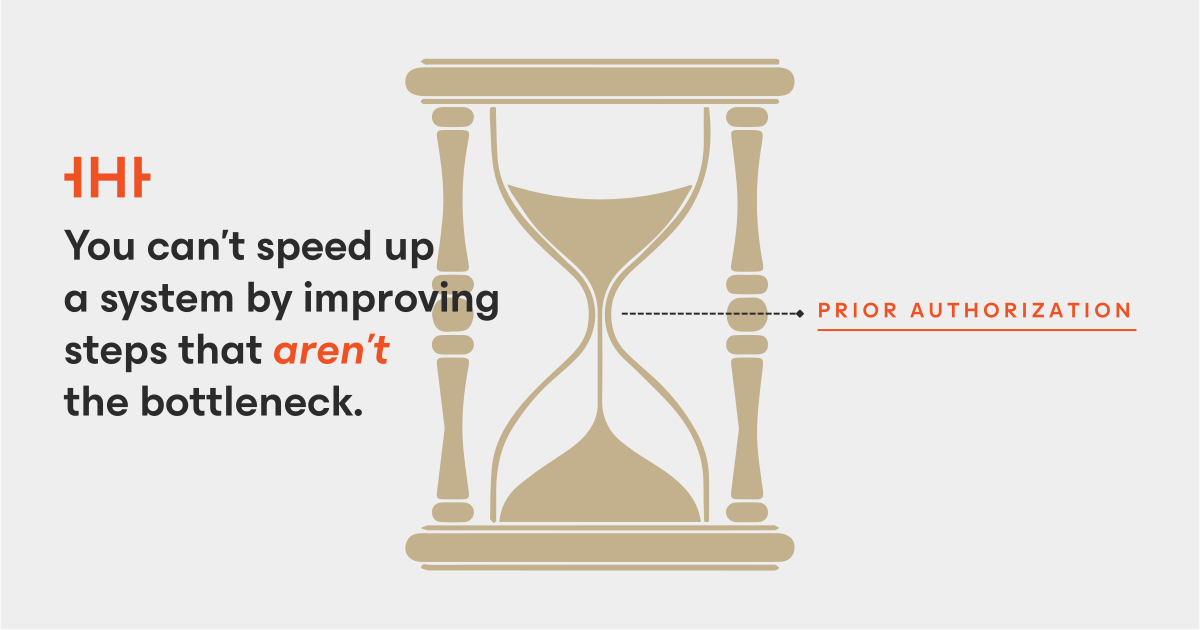
The organizations that have fundamentally transformed their revenue cycle operations share a common thread: they identified prior authorization as the constraint and solved it there, rather than optimizing around it.
That's harder than it sounds, because the instinct in revenue cycle management is to address problems where they're most visible, and PA problems often surface elsewhere. A denial looks like a billing problem. A rescheduled procedure looks like a scheduling problem. A write-off looks like a collections problem. But trace any of them back far enough and the authorization sits at the root.
Solving the constraint doesn't mean reducing the administrative burden of PA in isolation. It means widening the neck: building infrastructure where first-pass approval rates are high, where status is tracked without human follow-up, where post-authorization changes are caught before they become denied claims, and where staff are handling exceptions rather than routing routine cases. Organizations that have modernized prior authorization workflows report dramatic reductions in processing times alongside meaningful increases in approval rates. The ROI, when it comes, doesn't show up in a single line item. It shows up everywhere, all at once.
Prior authorization has always been the right place to start. The question is whether your current approach is built to clear the constraint, or just to manage the backup.
Humata is purpose-built for prior authorization: designed to automate the routine, accelerate the complex, and give teams back capacity. See how Humata clears the bottleneck: schedule a demo.


Prior Authorization Automation Is Only as Good as the Platform It Was Built On
Prior Authorization
Provider
Technology
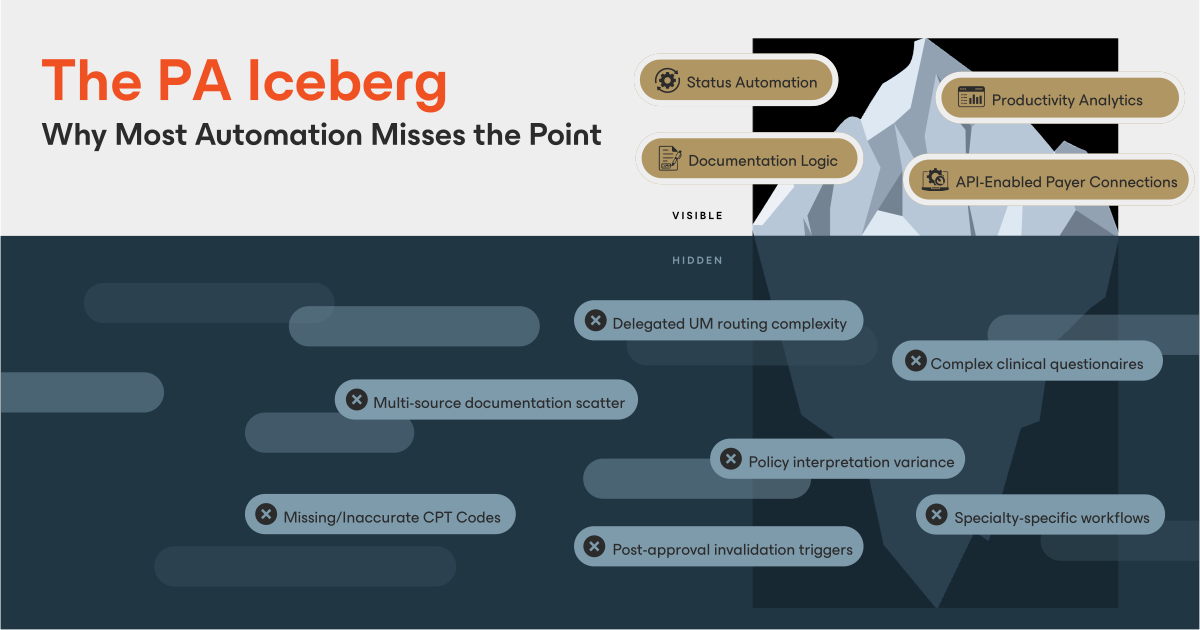
Why Prior Auth Automation Underdelivers After Go-Live
Prior Authorization
Provider
Technology