All posts




All posts
Policy
Prior Authorization
Provider
November 9, 2026
New Jersey's Ensuring Transparency in Prior Authorization Act (A1255, P.L. 2023, c. 296) was signed on January 16, 2024, and became operative for payers on January 1, 2025, according to a Department of Banking and Insurance bulletin. It stands out among state reforms because it pairs one of the fastest medication decision windows in the country with not only automatic approval for missed deadlines, but an additional daily financial penalty for noncompliance. In New Jersey, the reform act contains a built-in enforcement method for each and every claim – something laws in other states have not included.
The act sets a 24-hour response window for urgent specialty prescriptions and 72 hours for non-urgent medications . Under the statute, these deadlines apply to requests submitted through the NCPDP SCRIPT electronic standard, and the clock only starts once the carrier has received all relevant information (Assembly committee statement; DOBI Bulletin 24-17). The law also dictates that, beginning January 1, 2027, payers must accept and respond to medication prior authorizations only through secure NCPDP SCRIPT transmission (P.L. 2023, c. 296). Organizations still relying on fax or portal workflows for drug requests have a defined horizon for moving to electronic submission.
The act defines urgency with a very specific meaning– care qualifies as “urgent” when the standard timeframes could jeopardize a patient's life, health, ability to regain maximum urgency determination is controlled by the physician managing care, according to DOBI Bulletin 24-17. This definition, and subsequent assigning of physicians the role of determining the urgent label, allows physicians direct control over how quickly their claims can be addressed.
Medical services follow separate timelines. Urgent care decisions are due within 72 hours, non-urgent decisions within 9 days for electronic portal submissions or 12 days for paper submissions, and decisions for patients already admitted, hospitalized, or in the emergency department must be returned within 24 hours. Post-stabilization emergency services carry a 150-minute window (DOBI Bulletin 24-17).
The law applies to state-regulated insurance plans. The New Jersey Dental Association summary notes this covers roughly one-third of the state's population, with the State Health Benefits Program and the School Employees' Health Benefits Program among the examples (NJDA). Self-funded employer plans fall outside state insurance authority, so a provider's New Jersey volume will include a share of requests that the 24-hour standard does not govern.
A missed deadline results in the requested services being immediately authorized. The Commissioner of Banking and Insurance can also assess penalties of up to $10,000 per day of violation, after written notice and an opportunity to cure (DOBI Bulletin 24-17; P.L. 2023, c. 296). A timeline that carries both an automatic-approval consequence and a per-day penalty gives payers a strong financial incentive to build the staffing and clinical review capacity the 24-hour window requires.
Additionally, the act requires denials or limitations of care must be made by a physician working under the clinical direction of a New Jersey-licensed medical director. Reviewers cannot be compensated based on their denial rates. On appeal, the reviewer must be board-certified in the same or a similar specialty as the treating provider, must have treated the condition within the past five years, and must have had no role in the original decision. When the treating provider asks, the appeal reviewer must hold a telephone conversation with that provider (DOBI Bulletin 24-17).
Payers must post their clinical criteria, documentation requirements, and formularies on their websites and must publish prior authorization statistics segmented by specialty, medication or procedure, indication, and denial reason. Those statistics also cover appeal outcomes and decision times (DOBI Bulletin 24-17).
Two further provisions affect patients undergoing ongoing treatment. Prior authorizations for chronic or long-term conditions remain valid for 180 days, and a patient who switches payers can continue care approved under the previous plan for 60 days (New Jersey Dental Association summary).
Intake teams benefit from documenting criteria that illustrates why a request should be classified as urgent since that classification determines which timeline applies and the prescriber's determination is controlling. First-pass completeness and approval rates matter more under a 24-hour window, because the clock only begins once the carrier has the information it needs and a gap in the clinical record pushes the decision back. Providers should also confirm which of their patients sit in state-regulated plans, and plan the move to NCPDP SCRIPT submission ahead of the 2027 date. Identifying the clinicians who will take the telephone conversation with an appeal reviewer, and equipping them with the relevant records, shortens the path from denial to resolution.
New Jersey gives other legislatures a concrete reference point for how fast a statutory medication timeline can run, and the combination of deemed approval and daily penalties shows how a deadline can be made enforceable. States weighing faster drug timelines now have an enacted law to study, along with the operational lessons from payers working to meet it.
Bill numbers, effective dates, and provisions reflect available public reporting as of this writing. Confirm current requirements against the New Jersey Department of Banking and Insurance or the New Jersey Legislature before making operational decisions.
Sources: P.L. 2023, c. 296 (enacted text) · NJ DOBI Bulletin 24-17 · Assembly Appropriations Committee statement on A1255 · New Jersey Dental Association

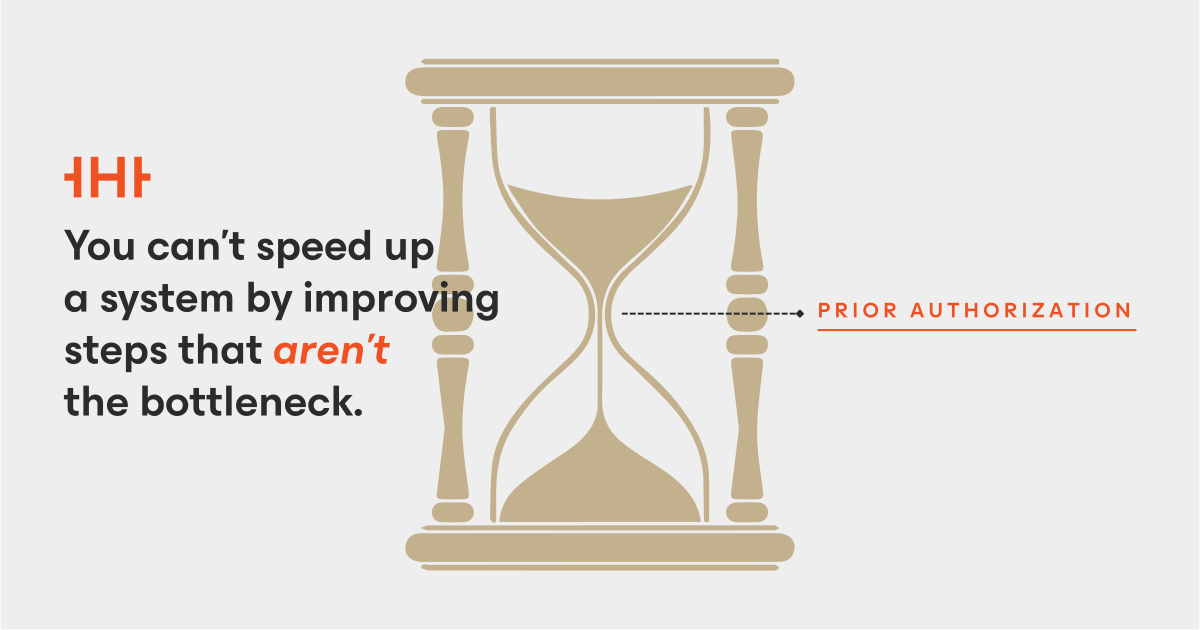
Prior Authorization is Stalling Your Revenue Cycle
Prior Authorization
Provider

CMS-0057 Checklist: What Health Systems Should Do Now to Prepare for the 2027 API Deadline
Prior Authorization
Policy
Provider